
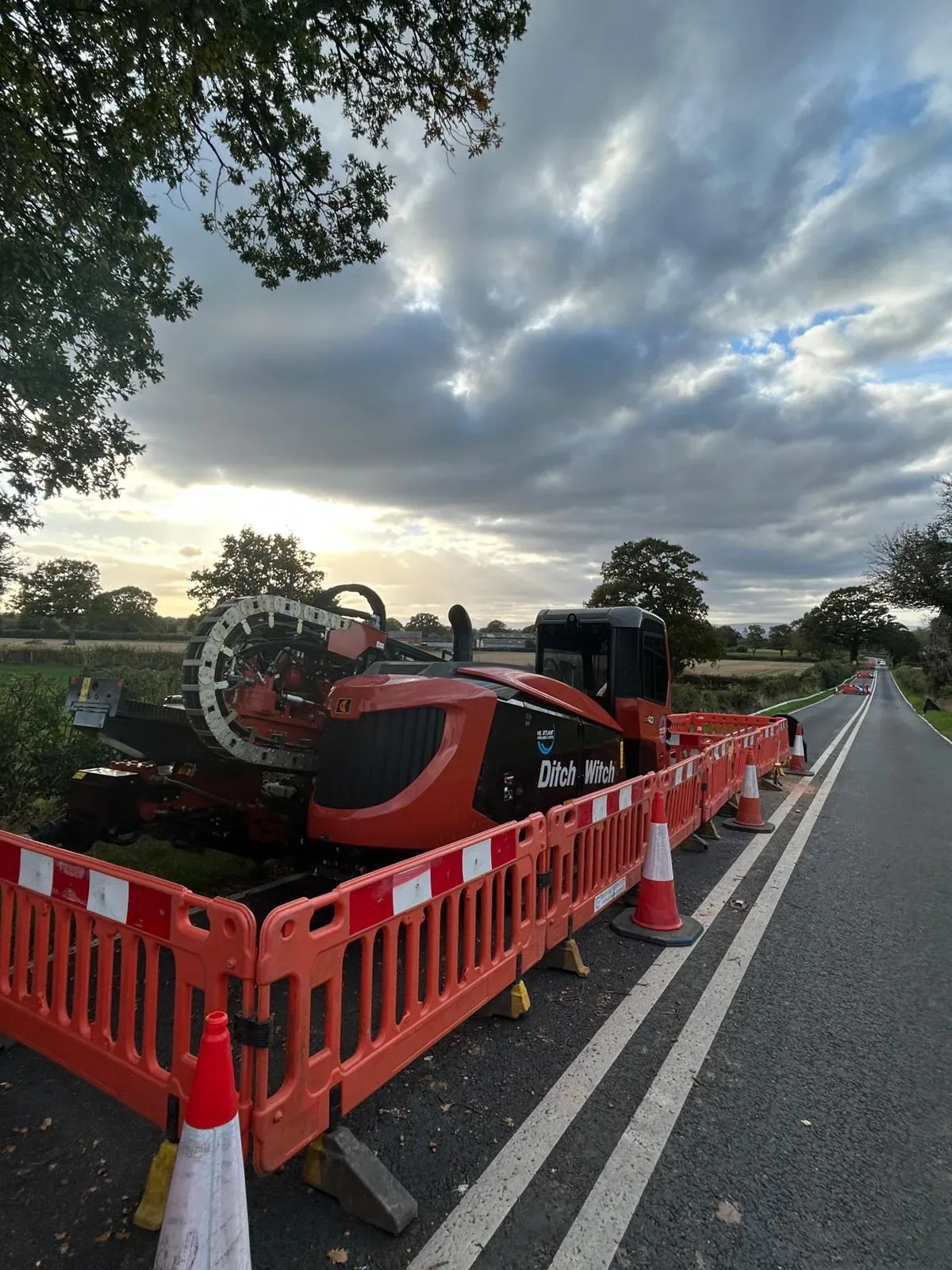
HDD Rail & Under-Track Crossings

Directional drilling rig set up for a rail under-track crossing
Network Rail-compliant under-track crossings

Network Rail-compliant under-track crossings using horizontal directional drilling – install utilities beneath live railway lines with no disruption to services.

Crossing beneath a railway demands precision, planning and compliance. Heartland Pipelines uses HDD to install pipes, ducts and cables beneath live rail without disrupting services, working to Network Rail standards and depth requirements.

Compliant, low-risk rail crossings

  • Accurately tracked bores at the required depth below the track
  • No excavation within the rail corridor
  • Detailed method statements and risk assessments
  • Experienced teams used to working around critical infrastructure

Utilities we install under rail

Water mains, sewers, gas and electric ducting and communications infrastructure – delivered as part of wider schemes or as standalone crossings.

Related services: Directional Drilling (HDD), Pipeline Installation, Utilities and Trenching.

Planning a project? Contact our team or call 01952 260505 for a no-obligation quotation.

  • STW-approved Tier 1 contractor
  • WIRS / WaterSafe accredited
  • UKAS certified
  • ISO 14001 environmental
  • Family-run since 2005
  • Ductile-iron HDD pioneer
  • In-house rock drilling

Frequently Asked Questions

Can you drill under a live railway?

Yes. HDD allows us to install services at the required depth beneath a live railway without excavating the track corridor, working to Network Rail standards.

How deep are rail crossings drilled?

Depth is set by the asset owner and ground conditions; our tracked drilling maintains the specified clearance beneath the track throughout the bore.

Horizontal Directional Drilling HDD

The installation of pipelines beneath busy roads or ecologically sensitive rivers without extensive trenching is a significant challenge. Horizontal Directional Drilling (HDD) addresses this through a highly effective...

Read more