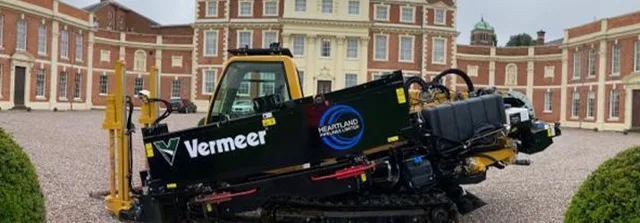
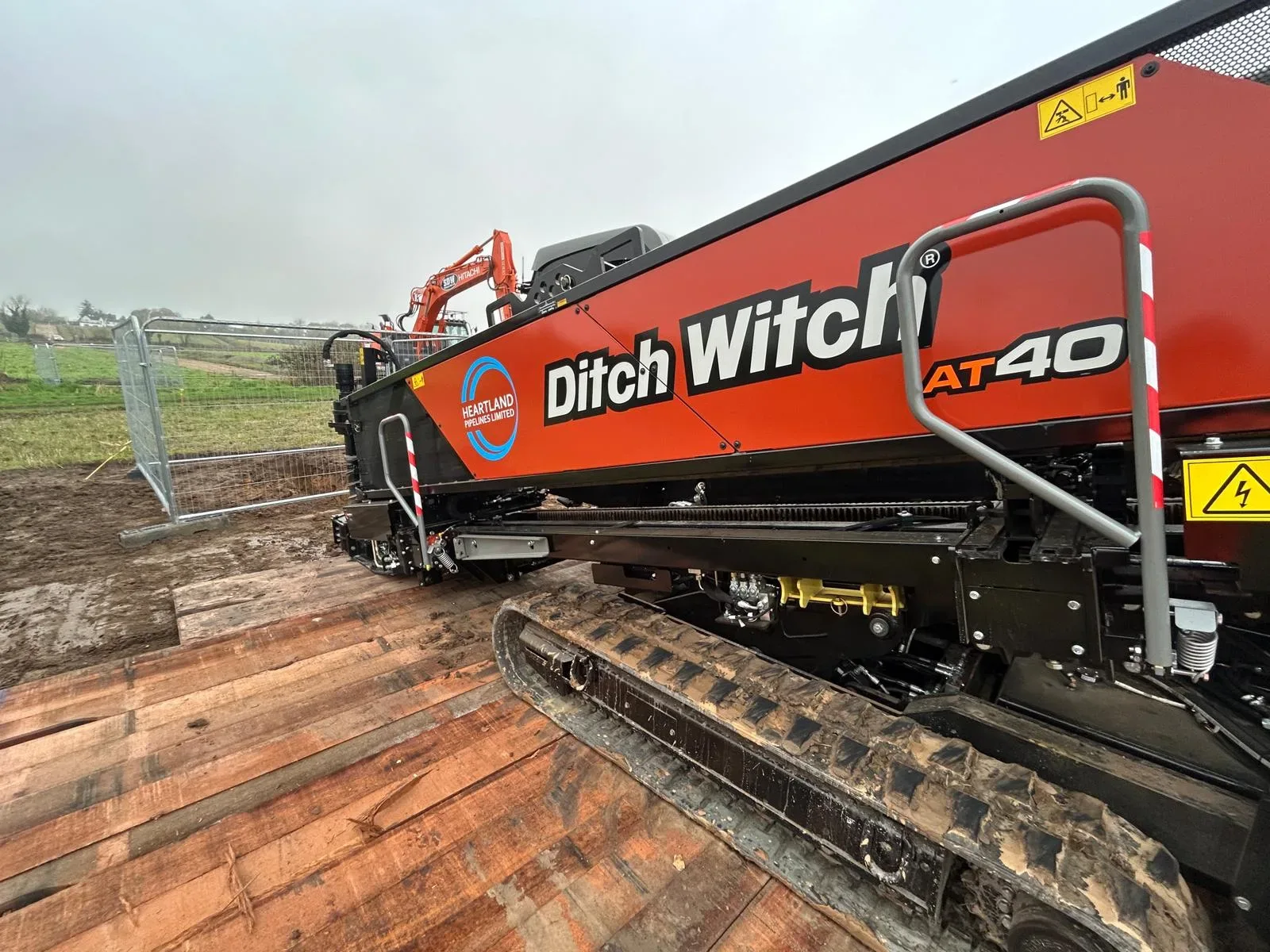
Horizontal directional drilling (HDD) is a trenchless method of installing underground pipes, ducts and cables along a steered, pre-planned path – without digging a continuous open trench. It is widely used to install water, gas, electric and telecoms infrastructure beneath roads, railways, rivers and environmentally sensitive areas.
How does HDD work?
HDD is completed in three main stages:
- Pilot bore: a small-diameter, steered hole is drilled along the designed path and tracked for depth and alignment.
- Reaming: the pilot bore is enlarged to the required diameter by pulling back a reamer.
- Pull-back: the product pipe or duct is pulled through the enlarged bore in a single operation.
What are the benefits of HDD?
- No open-cut trenching, so minimal surface disruption
- No road closures in most cases
- Ability to cross under roads, railways and rivers
- Faster installation and lower reinstatement costs
- Lower environmental impact and carbon footprint
Typical applications
HDD is ideal for road crossings, rail crossings, river crossings and work near sensitive habitats. It can install pipes up to 630mm in diameter over single shots of up to 500m, and even drill through rock.
See our directional drilling services or contact our team on 01952 260505.